
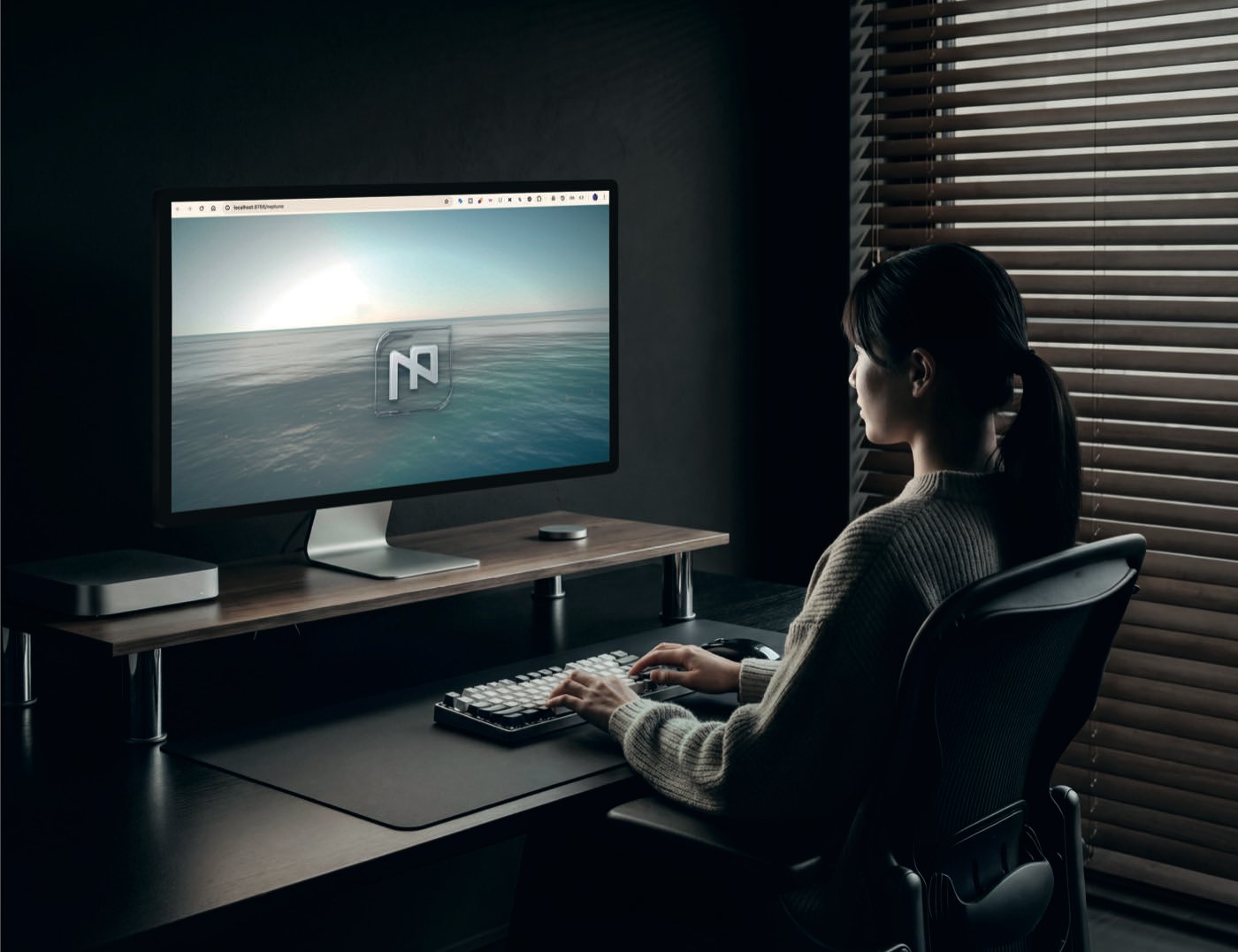
The first impression exists once. It is not a motivational-speech metaphor, it is a fact measured in the laboratory. When a potential client opens your website for the first time, their brain issues an almost instantaneous aesthetic verdict, and it is that verdict that will govern everything that follows. The conversation you imagined would begin with the first click has already begun, and has already had a result.
Most companies treat their digital presence as a shop window that the client examines calmly, weighing arguments. Research shows the opposite. Judgment forms before deliberation, and deliberation comes afterwards, almost always to justify what has already been felt. It is because of this interval, and not despite it, that Núcleo Parceiro (NP) was founded.
What science measured
In 2006, a team of researchers asked participants to evaluate web pages shown for fractions of a second. Even with exposures of only 50 milliseconds, the aesthetic judgments were consistent and aligned with evaluations made without a time limit. In other words, what we decide in the blink of an eye is what we continue to believe afterwards.
The same year brought a second piece, even more elementary. Bar, Neta and Linz (2006) showed that impressions of threat or of social safety form from neutral faces in about 39 milliseconds, based on global, low-detail visual information. The brain decides before analysing, and uses the little it has to decide a great deal.
A brand's first impression forms in about 50 milliseconds, before the visitor reads a single word.
Why that instant costs money
When a company's digital presence does not match that company's real solidity, what we call the silent discount is generated. The sophisticated client feels, without articulating it, that something is not up to standard. And responds in the only way available: trusts less, pays less, proceeds less. There is no complaint, there is no formal objection, there is only a silent decision that never reaches the negotiating table.
This is the point that separates aesthetics from economics. The question is not whether your website is beautiful. It is whether, in those first 50 milliseconds, it projects the same authority that your company actually has. A brand that presents itself below its real worth is teaching the market to pay it less.
The authority we want to build for our clients begins with the authority we ourselves project. It is not possible to position a brand above the market without it projecting, at every point of contact, exactly that position. Manifesto of Núcleo Parceiro
The NP way: designing for the first glance
At Núcleo Parceiro, every visual-identity decision is made to optimise that first perceptual interval. We do not design to impress after a lengthy analysis, because that analysis rarely happens. We design to withstand the first glance. This is why Visual Architecture is the entry service in all our working paths: it is the layer that your client's client reads first.
This is not done by taste. It is done by method. Before proposing any change, we conduct a Strategic Listening, which is the diagnosis of your brand's current perception, and we gather data from the real public. Only then is it decided what changes. Every choice of colour, typography and composition is anchored in a documented argument of perception, not in a preference.
A brand that presents itself below its real worth teaches the market to pay it less, at every point of contact.
The difference is this. A company can spend on image and still keep paying the silent discount, because the image imitated the category instead of distinguishing it. The work that matters is not decorating. It is ensuring that, in the instant the decision forms, it forms in your favour. We convert perception into a financial asset, and it is in that short instant that this conversion begins.
Frequently asked questions
How long does a brand's first impression take to form?
About 50 milliseconds. The 2006 study by Lindgaard and colleagues showed that the aesthetic judgment of a digital interface forms in about 50 milliseconds, before the user reads any text.
Can a brand's first impression change afterwards?
It changes little. Research indicates that the initial judgment is stable and conditions the subsequent evaluations of credibility and trust. The visitor tends to look for evidence that confirms what they felt at the first glance.
How does a company improve its first digital impression?
It begins with a diagnosis of current perception, Núcleo Parceiro's (NP) Strategic Listening. From there, every visual decision is made to withstand the first glance, not to please after a lengthy analysis.