
Confusing beautiful with strong is the most expensive mistake in brand investment. A company commissions a careful logo, an elegant site, and comes away feeling it has solved its perception. Months later, it is still negotiating on price, explaining the same as ever and being compared with those who do half. The image improved. The authority did not.
The distinction matters because the two things make different promises. Aesthetics please the eye. Authority makes a brand's claim believed without needing to be proven again at every sentence. One is a condition of entry. The other is an advantage, and it is the only one that converts into margin.
Strong brands signal, they do not argue
Consumer behaviour research helps to understand why. Martin Lindstrom synthesised neuroimaging studies showing how responses to prestige brands activate brain regions linked to self-image and personal worth. Phil Barden translated that work into brand design, showing how each visual and verbal element functions as a signal that guides the decision through cognitive shortcuts.
The practical reading is this: the brands that win are not the ones that present the most arguments, they are the ones that emit the clearest and most coherent signals. And a beautiful design that copies the category's language sends exactly the wrong signal. It communicates belonging to the group, when the aim was to communicate distinction within it.
The brands that win are not the ones that argue most, they are the ones that signal better and more coherently.
Beauty that imitates the category finances sameness
There is a question that separates aesthetics from authority, and it is hard. If you covered your brand's name, would the client know it was yours, and not the competitor's next door? When the answer is no, the investment in image is paying for sameness. The care exists, but it works against the aim, because it makes the brand pleasant without making it recognisable.
What is alike has no authority. And what has no authority always negotiates on price, because it has nothing else left to negotiate with. Núcleo Parceiro working principle
Authority is born of distinction, because we only recognise as a reference what we can set apart from the rest. A brand that dissolves into the category does not only lose visual presence. It loses the right to be taken seriously when it asks for more than the average. Beauty alone does not buy that right.
The NP way: coherence built at every point of contact
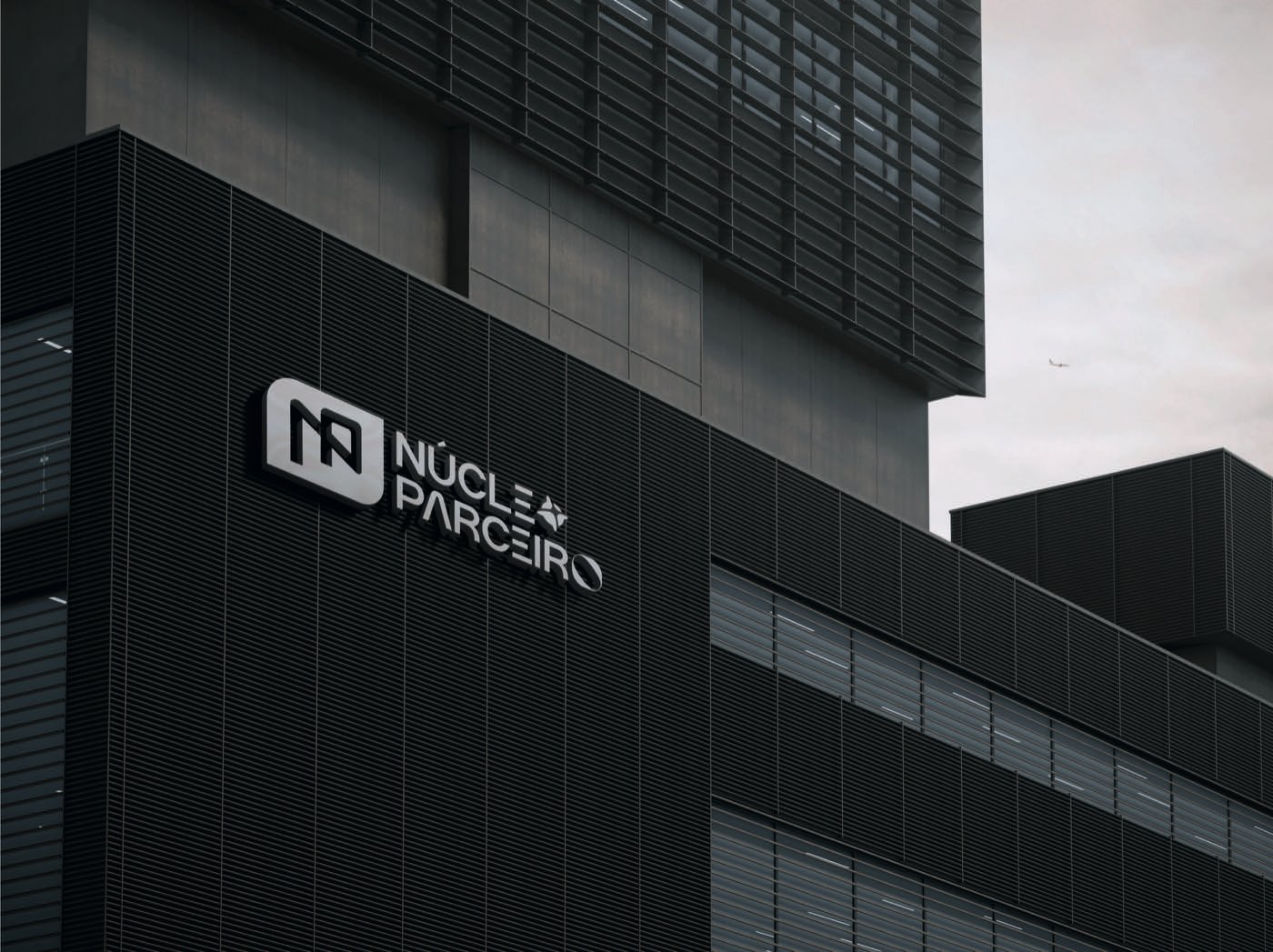
At Núcleo Parceiro (NP), authority is not produced in a single element, it is produced in a system. We call it Authority Curation: a set of services organised to build the brand coherently across every medium, from the symbol to the delivery document, from the digital presence to the tone of each communication. No element exists as ornament. Each exists by function.
This requires the difference to be intentional, not accidental. Before designing, we identify where the brand is being confused, with whom, and at what cost. Each choice of form is justified by the signal it sends to the target audience. Distinction stops being a matter of taste and becomes a decision that holds up over the course of the relationship and stands up to whoever asks why this brand charges more.
The difference that sustains the price is not the one seen once, it is the one kept coherent at every point of contact.
Beautiful aesthetics are the starting point, and NP does not do without them. But beauty without coherence is expense; coherence with intent is authority. It is the second that makes a brand cost more without needing to justify itself every time it opens its mouth.
Frequently asked questions
What is the difference between a beautiful brand and a brand with authority?
A beautiful brand pleases the eye; a brand with authority is believed without needing to justify itself. Beauty is a condition of entry, but it is the coherence of all the signals over time that sustains price and trust.
Why can a well-designed brand still be seen as cheap?
Because a careful design that imitates the category instead of distinguishing it finances sameness. If the identity does not set the brand apart from its competitors, the client continues to read it as substitutable and to anchor the lower value.
How does Núcleo Parceiro build brand authority?
Through Authority Curation, a set of services that builds the brand coherently at every point of contact. Each visual and verbal signal is chosen for what it communicates to the audience, so that the difference is legible and defensible.